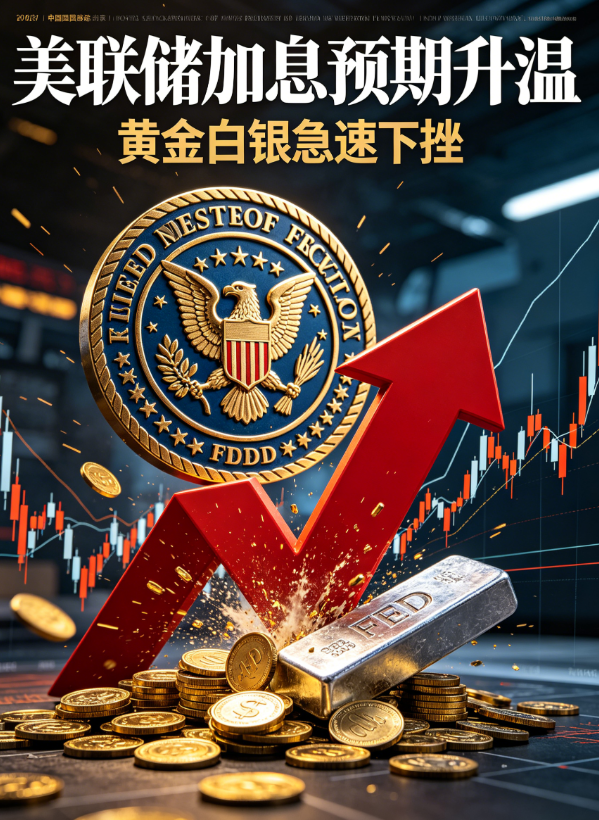
Fed Rate Hike Expectations Rise Drag Precious Metals, Gold and Silver Fall Under Pressure
Keywords: Gold price, silver price, Fed rate hike, US inflation, dollar index, precious metals sector
Introduction
On June 23, the global precious metals market saw a significant correction. London spot gold fell nearly 2% intraday, losing the $4,100/oz level; spot silver dropped even more sharply, falling nearly 5% to below $62/oz, with year-to-date losses exceeding 13%. Affected by the weakness in international gold and silver prices, the precious metals sector in both A-shares and Hong Kong stocks came under pressure, with related stocks generally declining and market sentiment cooling notably.
Fed Policy Expectation Change Becomes Core Disturbance
Industry insiders generally believe that this round of precious metals decline is not driven by a single factor, but the result of market repricing of the Fed's monetary policy path. As the pace of US inflation easing slows, foreign investment banks have started raising their expectations for Fed rate hikes this year, tightening trades reheating, pushing up dollar interest rates and exchange rates, thereby weighing on dollar-denominated gold and silver.
Bank of America recently judged that the Fed may hike rates by 25 basis points each in September, October, and December this year. The bank noted that price disruptions from tariffs, weakening effects from falling housing costs, and resilient core services prices suggest the path for US inflation to decline may be more tortuous than previously expected. Against this backdrop, the Fed's policy stance may shift back to tightening.
Inflation Resilience and "Hawkish Signals" Drive Market Volatility
From the latest market logic, the key pressure on precious metals comes from the overlapping expectations of "inflation resurgence" and "policy tightening." Bank of America expects the US core PCE year-on-year rate in May to reach 3.5%; if realized, this will further strengthen the view that high rates will persist longer. For non-yielding assets like gold, rising real rates often mean higher holding costs and relatively lower attractiveness.
Meanwhile, hawkish signals from new Fed Chair Kevin Warsh also reinforce market tightening expectations. Some analysts believe that newly appointed chairs typically prioritize building "anti-inflation" credibility, and before inflation stably falls, policy statements tend to be more cautious or even hawkish. This shift in expectations directly affects the pricing center for precious metals.
CME FedWatch data shows that traders now see a 51.2% probability of a rate hike in September, and a 89% probability in December. This change indicates that the market has gradually shifted from earlier expectations of rate cuts to adapting to a "higher for longer" rate environment.
Gold and Silver Enter Short-Term Consolidation Phase
From a technical and capital flow perspective, gold and silver prices had risen too quickly earlier, accumulating many profit-taking positions, which are more likely to be cashed out after a policy expectation reversal. Gu Fengda, chief analyst at GF Futures, pointed out that the sharp drop in London spot gold after the Fed meeting was essentially the result of "rate repricing" combined with passive selling. The underlying support for gold still comes from central bank gold purchases, diversified asset allocation, and other long-term logic, but short-term safe-haven demand is insufficient to reverse the trend.
Analysts generally believe that gold is currently entering a phase of volatile consolidation and expectation digestion, rather than a trend reversal. The temporary strengthening of the dollar index, rising real rates, and the market's readjustment to a high-rate environment will continue to suppress gold prices. Silver, with both financial and industrial attributes, tends to be more volatile when macro expectations tighten, so its correction is usually more severe.
Conclusion
Overall, this round of gold and silver decline reflects the global market's reassessment of the Fed's policy path, US inflation resilience, and changes in the dollar rate environment. In the short term, the precious metals market may maintain high volatility, and investors need to focus on key variables such as core PCE, inflation expectations, and subsequent Fed statements. For gold, the long-term allocation logic has not disappeared, but before a trend reversal is confirmed, the market is better suited for observing stabilization structures, and cautious about aggressive bottom-fishing.