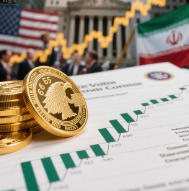
FOMC Hawkish Tone Below Expectations, Gold's Dilemma Amid Geopolitical Risk and Inflation
Against turbulent financial markets, the release of June FOMC minutes became a key short-term sentiment indicator. While the document continued the Fed's high vigilance on inflation, its hawkish bent fell below some market participants' pessimistic forecasts. Consequently, the US dollar index retreated slightly, offering a brief respite for risk assets. However, optimism did not last, as geopolitical uncertainties resurfaced, adding new variables to the global economic outlook.
FOMC Minutes: Hawkish Posture Somewhat Tempered
The June minutes showed some internal disagreement on the future rate path. Although most participants believed inflation remains well above 2% and requires a tight stance, some members began to flag risks of over-tightening to the economy. This relatively balanced tone contrasted with market expectations of a more aggressive hiking path.
In terms of market reaction, the dollar weakened slightly after the minutes, reflecting repricing of the Fed policy stance. Previously, markets had partly priced in the possibility of consecutive rate hikes; the more cautious wording weakened the dollar's short-term support. However, whether this adjustment persists depends on subsequent economic data.
Geopolitical Risk Flares: US-Iran Tensions Boost Oil Prices
Compared to Fed policy uncertainty, geopolitical risks are becoming a more prominent variable in global asset pricing. Renewed US-Iran frictions continue to keep international crude oil prices elevated. Tensions in the Middle East not only threaten global energy supply stability but also reshape market expectations of the inflation outlook.
As the lifeblood of modern industry, oil price fluctuations have broad transmission effects. When oil stays high, rising production costs gradually shift to consumers, pushing up the overall price level. This poses a severe challenge for central banks fighting inflation. Critically, energy price increases are sticky, making their inflationary impact more persistent than other commodities.

The chart shows the correlation between recent global crude oil price trends and major geopolitical events. It is evident that there is a significant positive correlation between the escalation of US-Iran tensions and phase-based oil price increases, reflecting the market's high sensitivity to Middle East developments.
Inflation Expectation Reshaped: Tightening Policy's Real Constraints
The interplay of high oil prices and geopolitical risk is reshaping market expectations of global inflation. Previously, some investors hoped inflation would significantly decline in the second half of the year, allowing the Fed to pivot. However, sustained energy prices risk disproving this expectation.
In a high-inflation environment, the Fed's dilemma becomes more acute. On one hand, price pressures demand policy firmness, maintaining or even increasing tightening; on the other hand, signals of slowing economic growth constantly warn of over-tightening risk. This predicament forces the Fed to communicate more cautiously, neither releasing doveish expectations prematurely nor being overly hawkish to avoid market turmoil.
Gold Under Pressure: Inherent Disadvantage of a Non-Yielding Asset
Against the backdrop of high inflation and tightening policy, gold, a traditional safe haven, faces structural pressure. Gold itself generates no interest income, an inherent characteristic. When interest rates rise, the opportunity cost of holding gold increases significantly, making investors prefer yield-bearing assets like bonds or deposits.
High inflation should normally benefit gold, as it erodes fiat currency purchasing power and highlights gold's store of value. However, current inflation coexists with Fed tightening. High inflation forces the Fed to maintain or strengthen its hawkish stance, which in turn raises risk-free rates, suppressing gold's upside.
Thus, the core contradiction in the gold market is the tug-of-war between inflation hedging demand and rising interest rate pressure. As long as the Fed maintains a hawkish tone, gold's upside ceiling is hard to break. Even if the dollar temporarily weakens on less hawkish-than-expected news, gold's rebound is more of a technical repair than a trend reversal.
Conclusion: Short-term Volatility vs. Long-term Logic
In summary, global financial markets are in a complex environment of multiple interwoven factors. Marginal changes in Fed policy signals, evolving geopolitical risks, and dynamic inflation expectations jointly determine major asset prices. For gold, a weak dollar and risk aversion may provide short-term support, but before the tightening stance reverses, its upside remains significantly constrained.
Looking ahead, market focus will gradually shift to actual inflation data and whether the Fed will make new trade-offs between growth pressure and price stability. Only if tight policy expectations loosen substantially or geopolitical risk escalates sharply, triggering market panic, will gold likely see a true breakout. Until then, investors should remain patient and rationally view gold's structural limitations in this special cycle.